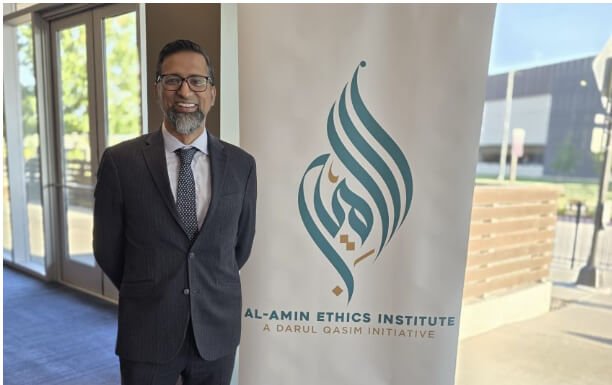
Four Muslim doctors in the United States have secured temporary court protection after challenging an Illinois law that allows terminally ill patients to obtain medication to end their lives, saying some of the law’s requirements conflict with their Islamic beliefs.
A federal judge has ordered Illinois not to enforce the challenged provisions of the state’s new assisted-dying law against the four physicians while their legal challenge continues.
The doctors — Dr Akbar Ali, Dr Asim Babar, Dr Omar Hussain and Dr Umar Shakur — filed the lawsuit in the US District Court for the Northern District of Illinois on September 16.
Their case names Illinois health officials as defendants and raises questions about religious freedom, medical ethics and the rights of healthcare professionals who object to assisted dying on religious grounds. Court records show the case was filed under the US Civil Rights Act.
The latest order came on September 30 with the agreement of the state of Illinois, according to the Becket Fund for Religious Liberty, which represents the doctors. The temporary protection means the four physicians will not face enforcement of the disputed requirements while the case proceeds.
Why the doctors object to
The dispute centres on Illinois’ End-of-Life Options for Terminally Ill Patients Act, commonly known as “Deb’s Law.”
The law took effect on September 12, making Illinois the first Midwestern state and the 13th US state, in addition to Washington, DC, to allow medical aid in dying.
Under the law, eligible terminally ill adults can obtain prescription medication that they may self-administer to end their lives.
To qualify, a patient must be an adult Illinois resident who is mentally capable of making medical decisions and has a terminal illness expected to result in death within six months.
The law also includes requirements involving multiple medical assessments, written and verbal requests, waiting periods and safeguards against coercion.
Illinois does not require every physician to participate in medical aid in dying.
However, state law says that when a healthcare professional is unwilling or unable to provide aid-in-dying care, the professional must at least inform the patient of that decision and refer the patient to another healthcare professional or entity that can assist with the request.
The law also contains provisions concerning the transfer of medical records.
It is these requirements that the four Muslim physicians are challenging.
The doctors say participating in or facilitating access to assisted suicide would conflict with their religious convictions.
According to their legal representatives, they believe human life is sacred and that their Islamic faith does not permit them to prescribe, facilitate or promote medication intended to end a patient’s life.
The physicians are seeking protection that would allow them to continue treating patients according to their religious convictions without facing penalties under the law.
A wider religious freedom battle
The case is not the first challenge to Illinois’ new law from religious healthcare providers.
Catholic leaders and healthcare workers had already taken the state to court, arguing that provisions of the law conflicted with their religious beliefs.
A federal judge granted temporary protection to some of those Catholic healthcare providers shortly before the law took effect on September 12.
The new case involving the Muslim physicians therefore adds an Islamic perspective to a growing legal debate in Illinois over where religious conscience ends and government regulation of healthcare begins.
The debate has also attracted opposition from disability-rights advocates, who have raised separate concerns about the potential impact of assisted-dying laws on people with disabilities.
One federal judge declined to block Illinois’ law in a lawsuit brought by disabled people and advocacy organisations before it took effect.
Supporters of the Illinois law, meanwhile, describe medical aid in dying as an additional option for terminally ill patients who want greater control over the final stages of their illness.
The law’s supporters point to its eligibility requirements and safeguards against coercion.
Court protection is temporary
The latest order does not invalidate Illinois’ assisted-dying law, nor does it resolve the underlying dispute between the doctors and the state.
Instead, it temporarily prevents Illinois from enforcing the challenged provisions against the four physicians while their lawsuit moves forward.
The case could require the court to consider how US constitutional protections for religious exercise apply when a healthcare professional’s religious beliefs conflict with obligations created by a state medical law.