Islamic finance is attracting international attention as financial leaders explore its potential to support sustainable economic growth, infrastructure development and financial inclusion.
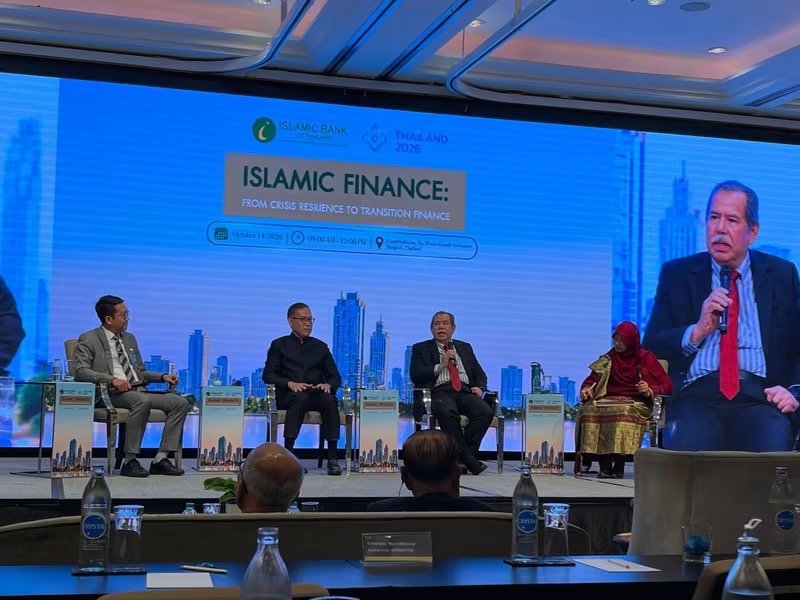
The issue featured at a global forum held in Bangkok, Thailand, on October 14, alongside the 2026 Annual Meetings of the International Monetary Fund (IMF) and the World Bank Group.
The forum, themed “Islamic Finance: From Crisis Resilience to Transition Finance,” brought together about 150 participants from Southeast Asia, Africa and the Middle East to examine how Islamic finance could strengthen financial resilience and support economic development.
Arga M. Nugraha, deputy president director of Indonesia’s Bank Syariah Nasional, discussed the need for greater use of profit-and-loss-sharing arrangements, improved measurement of financing outcomes and stronger cooperation among financial markets.
Participants also examined how Islamic financial instruments, including sukuk and risk-sharing arrangements, could mobilise funding for renewable energy, sustainable infrastructure and small and medium-sized enterprises.
The discussions included the role of zakat and waqf in supporting social protection and poverty reduction. Muhammad Sulaiman Al Jasser, chairman of the Islamic Development Bank Group, said the sector’s success should be measured not only by the growth of its financial assets but also by its contribution to public welfare and community resilience.
Nigeria has recently highlighted its experience with Islamic finance. Doris Uzoka-Anite, the country’s Minister of State for Budget and Economic Planning, discussed Nigeria’s national sukuk framework at the fifth AlBaraka Summit in London on October 14.
She said the framework had helped fund major public infrastructure projects, arguing that the contribution of a financial system to the real economy was an important measure of its value.
Sukuk are financial instruments structured to comply with Islamic principles, which prohibit interest-based lending. They are used to raise funds through arrangements linked to assets, projects or investments.
Following the Bangkok forum, the Islamic Bank of Thailand said it would develop a set of policy recommendations, known as the Bangkok Policy Note, on strengthening Islamic financial institutions, expanding financial inclusion and improving cooperation among markets