
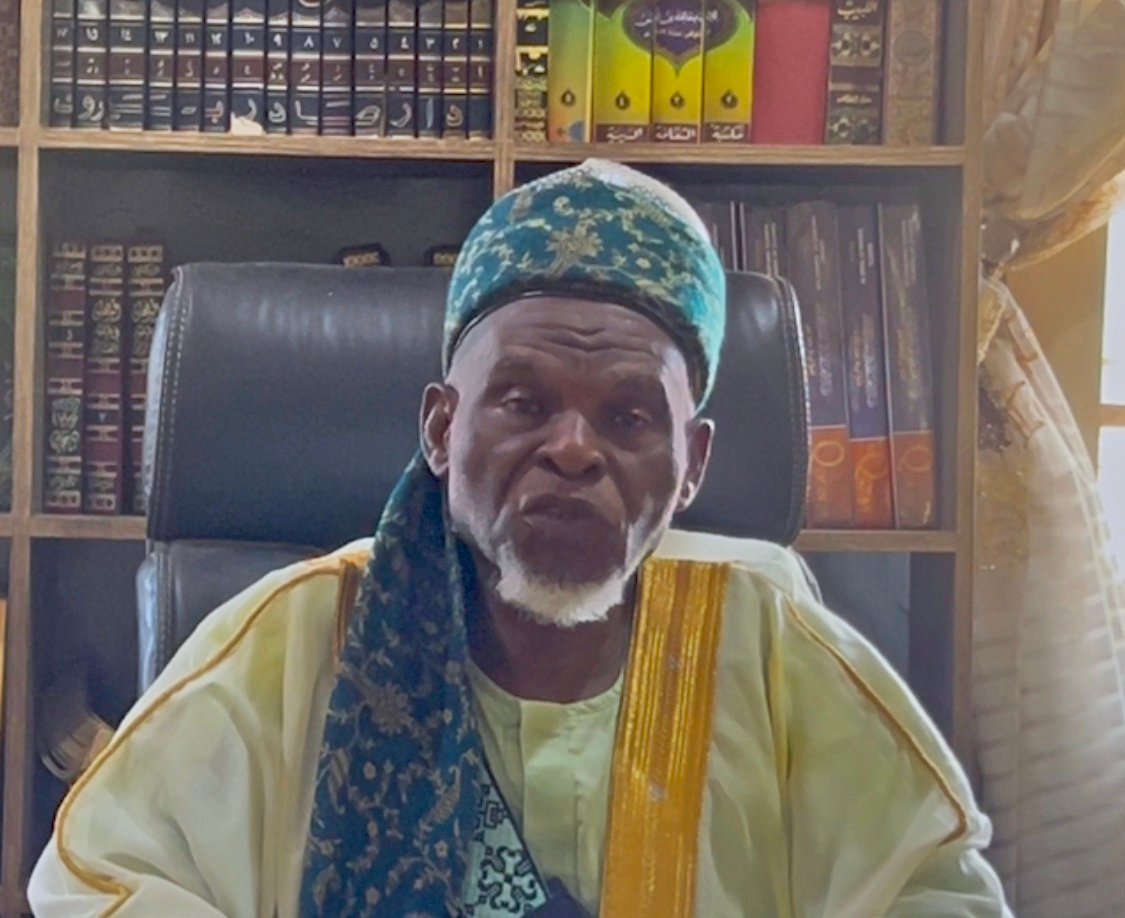
Sheikh Hamza Adamu Abdullahamid, chairman of the Ulama’u Council of Jama’atu Izalatil Bid’ah Wa Iqamatis Sunnah (JIBWIS) in Gombe State, has urged religious scholars to promote peaceful elections by encouraging voters to choose candidates based on merit rather than personal benefits.
JIBWIS, which Sheikh Hamza leads in Gombe State, is also known as the Izala movement. It is an Islamic organisation that promotes the teachings of the Quran and the Sunnah of Prophet Muhammad.
In an exclusive interview with Religion Journalism Foundation, Sheikh Hamza said religious leaders should encourage voters to assess candidates’ competence, plans and ability to deliver on their promises ahead of Nigeria’s 2027 general election.
Sheikh Hamza said Islamic teachings emphasised peace and justice, adding that religious leaders had a role to play in promoting peaceful political participation.
“Islam is a religion of peace. It’s a religion of justice,” he said. “If religious leaders play their role well in the society, Nigeria will be in peace.”
He urged religious leaders to remind politicians of their responsibility to protect citizens’ rights and fulfil their campaign promises.
He also called on preachers to encourage young people to examine candidates’ plans and compare the promises of different political parties before voting.
“If you check, you’ll see that there’s a difference between the vision and promises of most political parties. A differs from B, and citizens are given the right to vote the right ones,” he said.
The Independent National Electoral Commission (INEC) has scheduled the presidential and National Assembly elections for 16 January 2027, while governorship and State Houses of Assembly elections in participating states are scheduled for 6 February 2027.
“Preachers must ensure that they call on young people to check the most suitable leaders based on merit, and the goal is for this country to be better for our children to have a better future,” he said.
The cleric cautioned voters against resorting to violence when election outcomes did not favour their preferred candidates.
“Don’t take the law by your hand,” he said. “Maybe you see something happen against your wish, don’t try to create violence out of it. It will only further destroy people.”
He also urged religious leaders to prepare political candidates for the possibility of losing elections, noting that several people could contest for one position but only one would emerge victorious.
“In elections, you find sometimes about 10 candidates aspiring for one position, and only one person can be elected,” he said.
Sheikh Hamza urged religious leaders to teach tawakkul, an Islamic concept of placing trust in Allah, to candidates who lose elections, encouraging them to accept defeat peacefully.
He then urged voters to choose candidates based on merit rather than personal benefits.
“The people that are voting should vote based on merit,” he said. “Vote for who deserves this position. Vote for someone who can do the work before him.”
He urged voters to prioritise candidates’ competence over the personal benefits they might receive from them.
“Don’t vote someone because you’re going to benefit from him, vote him because he is someone competent to lead,” he said.
Sheikh Hamza also warned voters against relying solely on campaign promises, saying some politicians presented themselves as capable leaders before elections but failed to meet public expectations after taking office.
“We must be careful because politicians are deceitful these days,” he told Religion Journalism Foundation. “Someone will promise of being as good as Sardauna, but once elected into power, the outcome becomes different.”
Sardauna refers to Ahmadu Bello, the late premier of Northern Nigeria, who remains an influential figure in the region’s political history.
Sheikh Hamza said Nigeria had considerable natural resources but needed effective leadership to use them for development.
“This country is rich in petroleum, agriculture, and what we need is good leadership,” he said.