
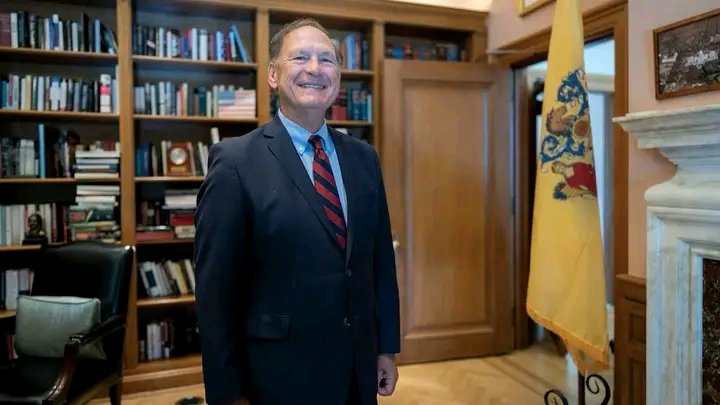
U.S. Supreme Court Justice Samuel Alito has warned that Christians and other religious believers in the United States face growing pressure when their faith-based convictions conflict with contemporary views on same-sex marriage.
This is coming at time when the Trump administration is mounting pressure on Nigeria to tackle what it calls religious discrimination and “Christian Genocide” targeting Nigerian Christian communities by Islamic extremists.
According to ABC News, Alito described the Supreme Court’s 2015 decision recognising a constitutional right to same-sex marriage as a significant turning point in the debate over religious liberty in the United States.
Alito, a Catholic and one of the court’s conservative justices, was among the four dissenting justices in the 5-4 decision in Obergefell v. Hodges, which legalised same-sex marriage nationwide.
In speeches collected in his new book, ‘So Ordered’, Alito revisited concerns he raised in his dissenting opinion, particularly about the consequences for Christians whose religious beliefs teach that marriage is between a man and a woman.
He argued that religiously motivated opposition to same-sex marriage could increasingly be viewed as discriminatory or bigoted, creating difficulties for Christians seeking to live according to their faith in public life. “Quite suddenly, religious liberty has become controversial,” Alito said in a 2022 speech, according to ABC News.
The justice has pointed to several legal disputes involving Christian individuals and organisations that faced legal challenges after declining to participate in same-sex weddings because of their religious convictions.
One prominent example involved a Colorado baker who declined to create a wedding cake for a same-sex couple. The Supreme Court ultimately ruled in favour of the baker on narrow grounds.In another case, the court sided with a Christian website designer who objected to creating wedding websites for same-sex ceremonies because doing so would conflict with her religious beliefs.
For Alito, such cases illustrate the continuing tension between religious freedom and laws protecting LGBTQ+ people from discrimination. The justice has maintained that Christians should not be forced by government policy to express messages or participate in activities that violate their sincerely held religious beliefs.
At the same time, ABC News noted that the Supreme Court has frequently ruled in favour of religious parties in cases involving conflicts between faith and government regulations. Alito’s concerns come amid an ongoing American debate over how to balance constitutional protections for religious exercise with legal protections for LGBTQ+ people.
While Alito has strongly criticised the Obergefell ruling, ABC News reported that he said in 2025 that he was not calling for the decision to be overturned. The issue nevertheless remains significant for conservative Christians, many of whom view the protection of religious freedom as essential to their ability to practise and publicly express their faith.