
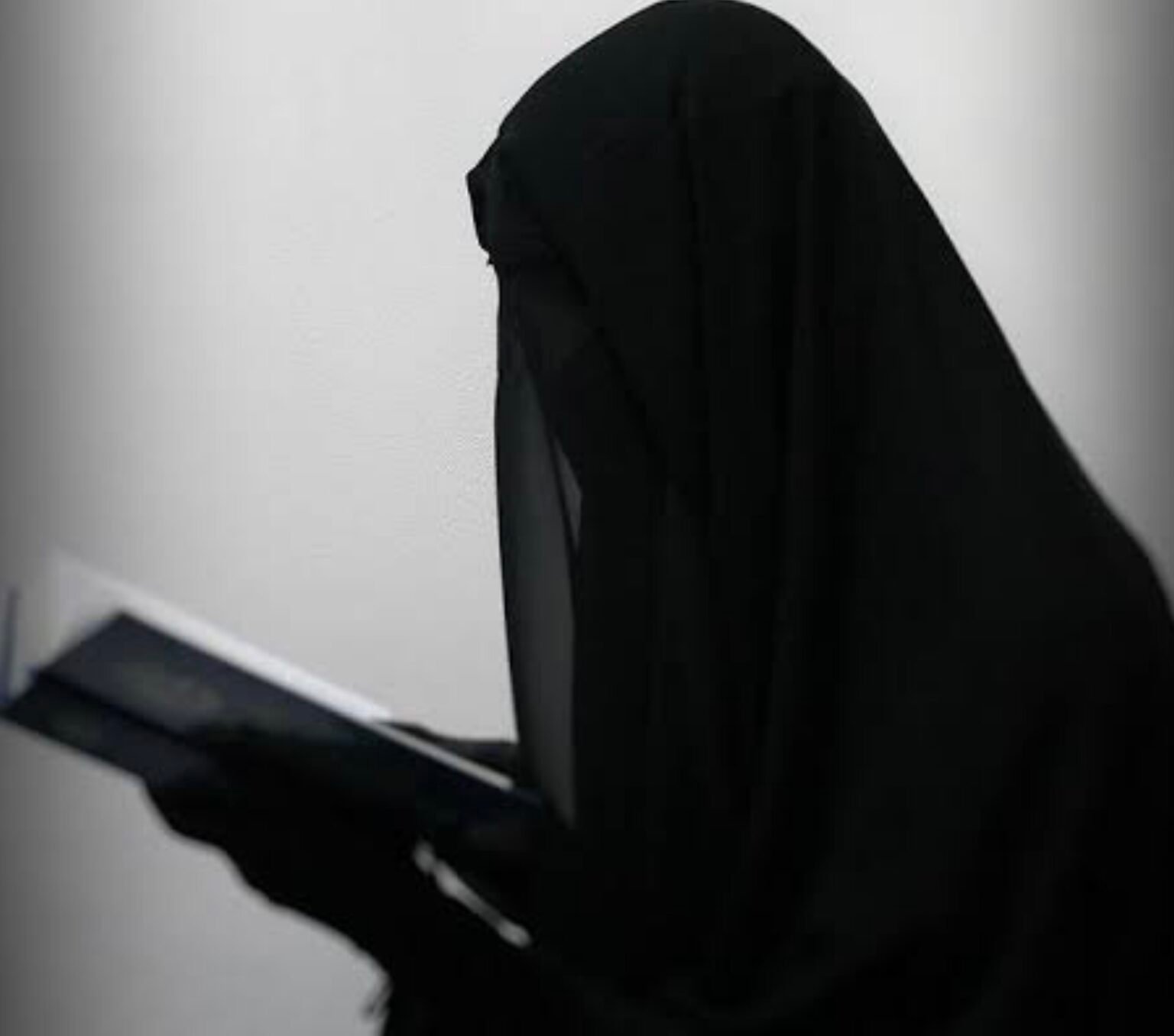
The sun has barely risen, but the sound of children reciting the Qur’an already fills Maryam Usman’s home. She moves among them with a cane, listening to their recitations, correcting mistakes in their pronunciation of Arabic words and disciplining those who fail to read their assigned passages.
“They come here as early as 6:30 a.m.,” Maryam said. “The first thing I do is ensure that every student has been assigned what to read throughout the day before I go around to check whether they are reading correctly.”
Every morning, the 46-year-old woman spreads mats in the courtyard of her home in Yola South Local Government Area of Adamawa State, welcoming children from the neighbourhood who come to learn the Qur’an under her guidance. Her home-based Qur’anic school, known locally as an Allo school, now has more than 100 students.
Maryam’s involvement in Qur’anic education began in childhood. Her mother ran a similar school in their family home, where she grew up learning the Qur’an alongside other children. After completing her own Qur’anic education, she began teaching alongside her mother, helping to pass the knowledge she had acquired to younger learners.
When she married, Maryam decided to continue the tradition in her own home.
“When I got married, one of the first things I asked my husband was to allow me to open an Allo school in our home. Thankfully, he agreed,” she said.
She initially taught her own children. As more families in the neighbourhood learned about the lessons, they began bringing their children to join, and the school gradually grew to more than 100 students.
Makarantar Allo: The wooden-board school
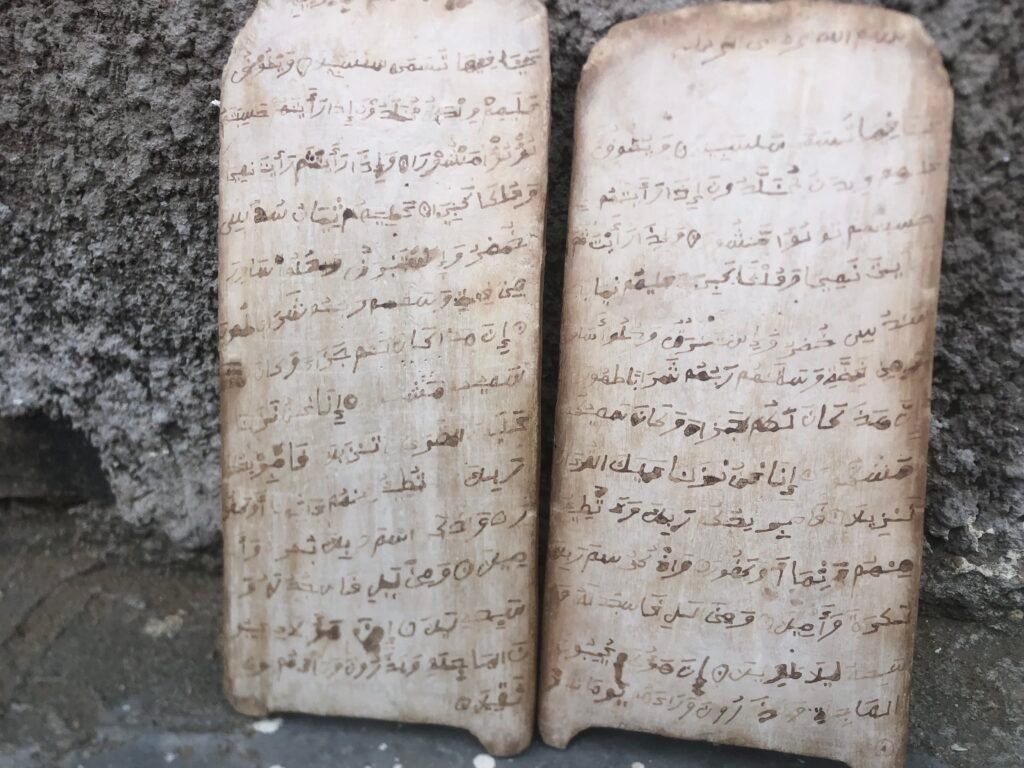
The school Maryam runs is known as Makarantar Allo, which loosely translates to “wooden-board school” in English. The name comes from the allo, a wooden board used to write Qur’anic verses as students learn to read, recite and memorise them.
Research shows that the tradition of Qur’anic education in Northern Nigeria dates back to the period before British colonial rule. Known in many places as Tsangaya, the system has long provided a place for children to learn how to read, recite and memorise the Qur’an. Some schools also teach other areas of Islamic knowledge.
This tradition grew alongside the spread of Islamic scholarship in regions such as Kanem-Borno and Hausaland. In these schools, students gather around their teachers to learn, sometimes in homes and courtyards. Wooden boards, known as Allo, are used to write Qur’anic verses for students to read and practise.
At Maryam’s school, the wooden board is central to how students learn the Qur’an.
“We use tawada, a local ink, to write on the Allo,” Hajara said. “Most of the time, I write for the students myself. As they learn how to write, I let them do it on their own,” she added, showing an Allo belonging to one of her students.
While much of the discussion about traditional Qur’anic schools focuses on male teachers, women have also played a role in passing Islamic knowledge from one generation to another. A 2025 study that examined the place of women and girls in Northern Nigeria’s Qur’anic education system highlighted their contributions as teachers and as people who sustain religious learning within their families and communities.
Between lessons and household chores
Running a Qur’anic school from her matrimonial home means Maryam must find time for both teaching and household responsibilities. To manage the two, she wakes up early and completes most of her domestic work before her students begin arriving.
“I wake up early in the morning so that I can do most of my housework before the students come. When they leave, I also try to finish whatever work is left before the evening session begins,” she said.
The morning lessons start at about 6:30 a.m. As the students arrive, they sit in separate sections for males and females and begin reading their assigned passages. Maryam attends to them one after another, giving each student a lesson to learn and checking their recitation as they read.
“Each student has a lesson to read. As they continue reading, I go around to check whether they are reading correctly. When a student finishes one lesson, I give them another,” she explained.
By 7 a.m., students who attend conventional schools are allowed to leave for their regular classes. Others continue with their Qur’anic lessons. Most of the children attending Maryam’s school are below the age of 19.
Managing more than 100 students requires her to organise the lessons carefully. She appoints some students as monitors, while senior students help guide younger learners. This allows the lessons to continue even when she needs to attend to other responsibilities.
“I cannot be with every student at the same time, so some of the senior students help the younger ones. I also appoint monitors to help keep things organised while I attend to other work,” she said.
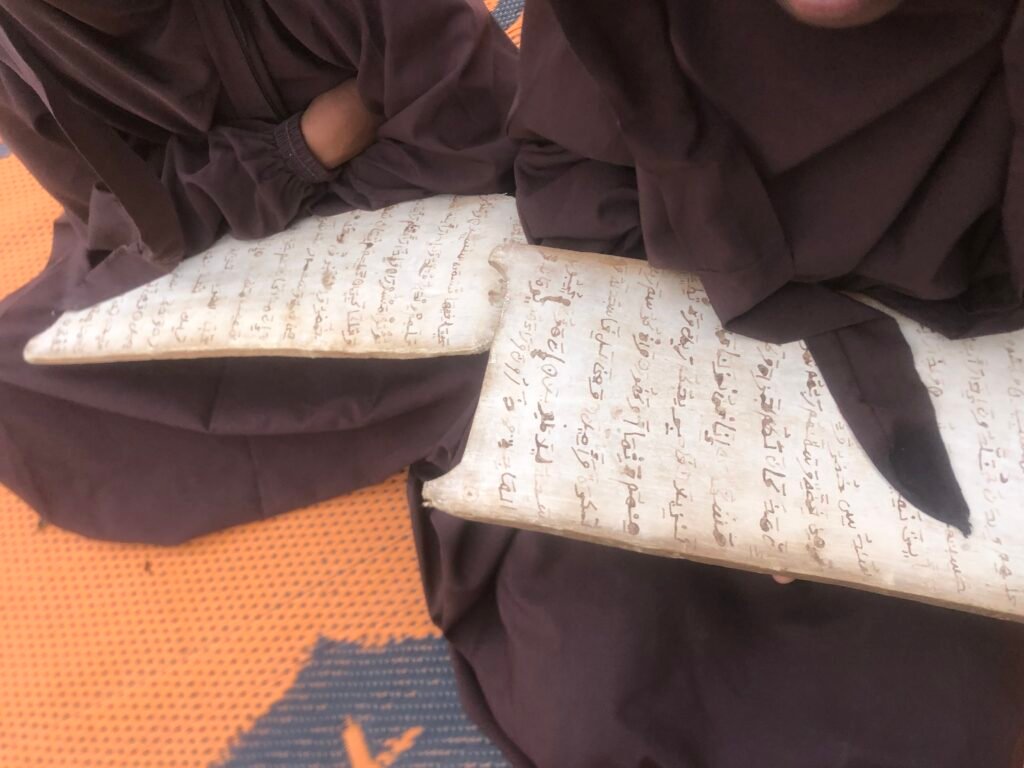
However, managing so many students is not always easy. With children of different ages learning together, disagreements sometimes arise, and some students get into fights. On occasion, these disputes also create problems between their families, adding to the responsibilities Maryam must manage as their teacher.
“There are times when I feel like quitting because managing so many students is not easy. Sometimes, the students fight, and the problem can extend to their families. I have to find a way to handle these situations and ensure that the lessons continue,” she said.
The daily noise from more than 100 students reciting the Qur’an can also take a toll on her. As she moves from one student to another, listening to their recitations and correcting their mistakes, the noise sometimes leaves her with headaches.
“Sometimes, the noise gives me a headache, and there are days when I feel tired from managing the students. But I continue because I know why I started the school and what I want these children to learn,” she said.
Despite these challenges, Maryam continues to teach. Her commitment to the school means finding ways to manage the students, settle disagreements and keep the lessons going, even when the work becomes exhausting.
The period after the morning session is another opportunity for her to attend to household chores and prepare for the next round of lessons. She tries to complete most of her work before the students return in the afternoon.
The afternoon session begins at about 2 p.m. and ends at 4 p.m. Students who attend conventional schools can return for their Qur’anic lessons after their regular classes.
A purpose beyond income
For Maryam, teaching the Qur’an is not a job she does to earn a living.
“I am not doing this because I want to make money. I want to continue what I learnt from my mother and help these children learn the Qur’an. I believe that teaching them the words of Allah carries a reward that is greater than what money can offer,” she said.n
Beyond the spiritual reward she hopes to receive, Maryam said having students around her also gives her a sense of purpose. Rather than spending her time at home without much activity, she finds fulfilment in teaching and interacting with the children who gather in her courtyard.
“Having these students around me keeps me busy. I enjoy being with them and teaching them. It gives me peace and makes me feel that I am doing something meaningful with my time,” she said.
Although she does not earn a salary, the school collects a weekly contribution of ₦50 from each student to support some of its activities. The money helps cover small expenses that arise during lessons, including the purchase of basic first-aid supplies for students who become unwell.
Maryam keeps medicines such as paracetamol for students who experience mild headaches during lessons. With many children reading aloud in the courtyard, the noise can sometimes leave some of them complaining of headaches.
“The money is not a salary for me. We collect it to take care of some things the school needs. If a student has a headache or there is another small problem, I try to make sure we have something available to help,” she explained.
For families in the neighbourhood, Maryam’s courtyard remains a place where children can learn the Qur’an and grow in their understanding of Islam. For Maryam, it is also a place where she continues a tradition inherited from her mother, despite the daily demands and challenges that come with teaching.