
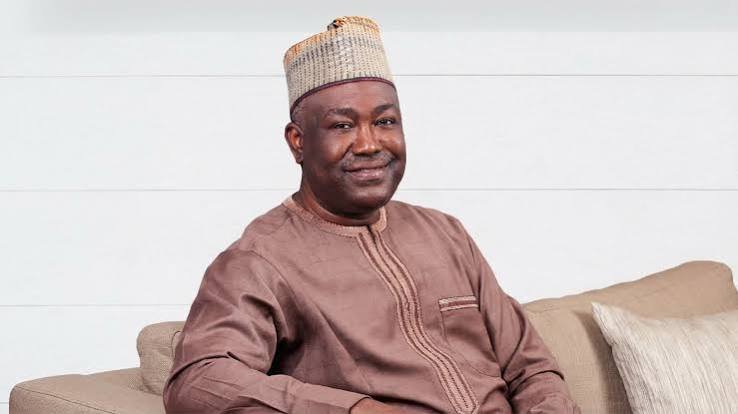
Accord Party presidential candidate, Gbenga Olawepo-Hashim, has pledged to criminalise religious persecution and establish an independent commission to investigate attacks on religious communities if elected president in the 2027 general elections.
Hashim made the pledge in a policy brief submitted to the United States Congress and the United States Commission on International Religious Freedom (USCIRF), ahead of a US House hearing on alleged religious persecution in Nigeria.
He said his administration would make the protection of religious freedom a central part of its security and conflict prevention strategy, ensuring that Christians, Muslims and other religious groups could practise their faith without fear.
The presidential hopeful acknowledged attacks on Christians, churches and pastors in parts of northern and central Nigeria but argued that religious persecution in the country was not limited to one faith.
He said Shia Muslims, minority religious groups and some Hausa Muslim communities also faced persecution and discrimination.
“Christians in northern and central Nigeria face persecution. Churches have been burned, villages destroyed, and pastors killed. This is real. But Shia Muslims, minority sects, and Hausa Muslim communities also face persecution and discrimination,” he said.
Hashim proposed convening a national religious freedom summit within 90 days of assuming office, bringing together the Christian Association of Nigeria (CAN), the Nigeria Supreme Council for Islamic Affairs (NSCIA), Shia leaders, Hausa cultural representatives, victims, women, youths and internally displaced persons.
He also promised to pursue a National Religious Freedom for Conflict Prevention and Countering Violent Extremism Act within 180 days of his inauguration.
The proposed legislation would criminalise religious persecution, hate incitement and forced displacement.
As part of the plan, Hashim said he would establish an independent national commission with offices across the 36 states and the Federal Capital Territory to investigate attacks on religious communities.
He proposed that investigations should be completed within 30 days, with findings made public and victims compensated.
The Accord Party candidate also promised to establish a National Guard to protect vulnerable communities, farms, schools and places of worship.
He said his security programme would support the return of displaced persons and the reconstruction of communities affected by violence in Plateau, Benue, Kaduna and Borno states.
On international cooperation, Hashim called for a partnership between Nigeria and the United States to convene an international conference on security in Nigeria and the Sahel within the first 100 days of his presidency.
The proposed conference would involve the Economic Community of West African States (ECOWAS), African Union, United States and other international partners, with discussions focusing on religious freedom, intelligence sharing, border security and countering violent extremism.
Hashim also linked religious freedom to the credibility of the 2027 general elections, warning that political intimidation, incitement and electoral malpractice could worsen existing divisions.
Citing the reported attack on activist and political figure Omoyele Sowore in Ekiti State, he urged the United States to support Nigeria’s electoral process through international observation, technical assistance to the Independent National Electoral Commission (INEC) and engagement with civil society organisations.
“This is not a request for America to choose Nigeria’s leader. It is a request for America to help Nigerians choose their own leader, free from religious and political violence, intimidation and rigging,” he said.