
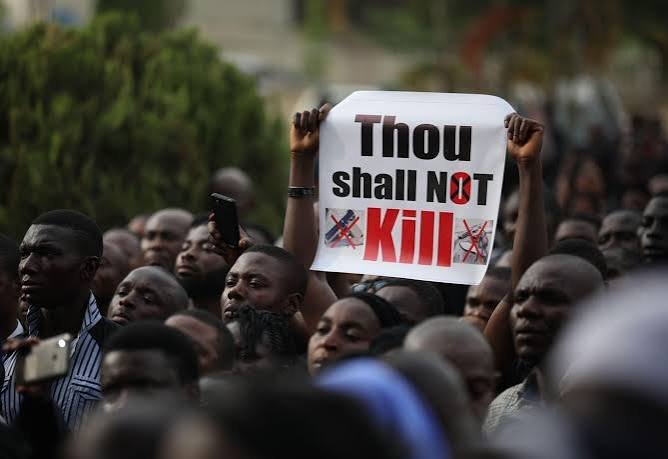
The Apostolic Nuncio to Nigeria, Archbishop Michael Francis Crotty, has acknowledged that people of other religious backgrounds have also suffered from insecurity in the country, but maintained that Christians have been specifically targeted in some parts of Nigeria.
“There is no doubt that people of other faiths have also been affected by insecurity in Nigeria. However, we cannot deny the fact that Christians have been specifically targeted in some parts of the country,” Crotty said.
He spoke at the 18th National Conference of the Association of Papal Knights and Medalists in Nigeria (APKMN), held in Owerri, Imo State, where Catholic leaders raised concerns over the persecution of Christians and its consequences.
In his address, Crotty said Christians had experienced different forms of persecution throughout Nigeria’s history, but noted that violent attacks had increased over the past two decades.
“In recent years, Christians have been targeted by kidnappers, and many lay faithful and priests have been kidnapped. Many of those kidnapped were killed, and others were released after ransoms were paid. Thousands of churches have been attacked and destroyed since the beginning of Boko Haram and the activities of herdsmen in more recent years,” he said.
The Apostolic Nuncio also alleged that Christians in some parts of the country, particularly northern and North-Central Nigeria, had been denied legitimate access to land for constructing places of worship.
He warned against politicising the issue, saying discussions about Christian persecution were sometimes influenced by religious sentiments and bias.
“Very often the issue of persecution of Christians in Nigeria is politicised and approached with some sort of bias and religious sentiments,” he said.
Crotty called for action to end killings across religious divides, stressing that the protection of citizens should remain the priority.
“Our concern should be the necessary actions to take in order to bring the unnecessary killing of all citizens to an end, whether they are Christian or of other faiths,” he added.
Also speaking at the conference, the Archbishop of Owerri, Most Rev. Lucius Iwejuru Ugorji, highlighted the human and material consequences of insecurity, including deaths, displacement, interrupted education and financial losses.
“Ultimately, whether the crisis is perceived as a targeted persecution of Christians or a complex socio-economic conflict, the human and material toll is undeniable,” Ugorji said.
He said tens of thousands of people had lost their lives, millions remained internally displaced, thousands of children had experienced disruptions to their education, while millions of naira had been lost through property destruction and ransom payments.
Ugorji called on the government to strengthen its responsibility to protect citizens and ensure that perpetrators of violence were held accountable, regardless of their religious affiliations.
“We have to state loud and clear that it is the responsibility of government to prevent human rights violations, protect vulnerable populations, whether they are Christians or Muslims, and ensure accountability for crimes against law-abiding citizens,” he said.