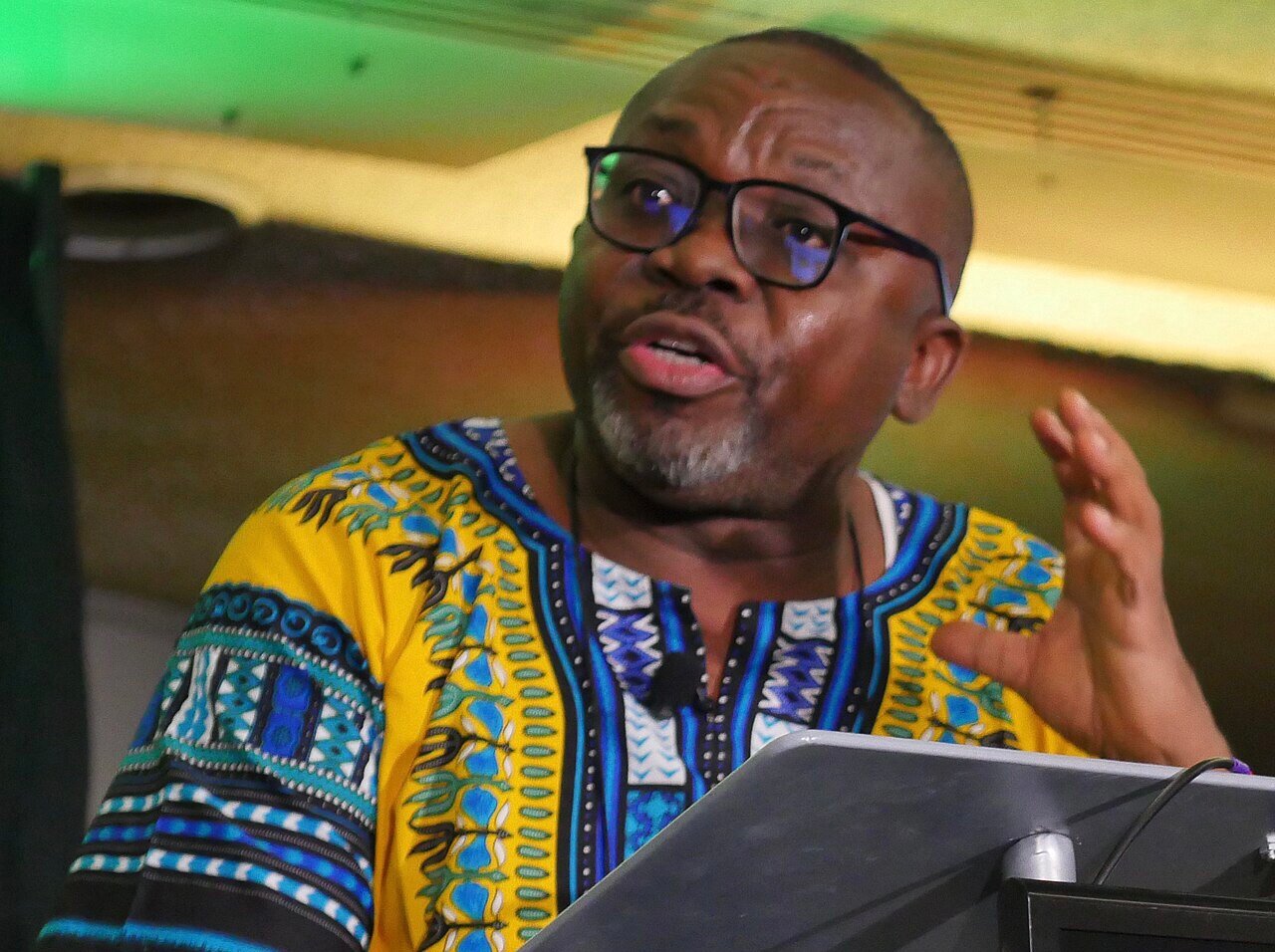
Nigerian human rights advocate Leo Igwe has accused the government of discriminating against minority religious and belief groups by providing prayer rooms for Christians and Muslims at airports without making comparable provisions for other groups.
Igwe made the allegation in an article published by ModernGhana on Sunday, October 11, arguing that the arrangement raises questions about Nigeria’s commitment to freedom of religion or belief.
Igwe is a humanist and human rights advocate whose work focuses on freedom of belief and the persecution of people accused of witchcraft, particularly children. He founded Advocacy for Alleged Witches, an organisation that campaigns against abuses linked to witchcraft accusations.
In his article, titled FoRB: Airports and Discrimination Against Minority Faith and Belief Groups in Nigeria, Igwe questioned why airport prayer facilities cater to Christians and Muslims without comparable provisions for people who follow traditional religions, identify as atheists or humanists, or hold other beliefs.
“Otherwise, how does one explain the situation at the airports where the government provides prayer rooms for only Muslims and Christians?” he asked.
He argued that people whose beliefs fall outside Christianity and Islam should also have access to spaces where they can pray or reflect.
Igwe proposed that airport authorities make existing prayer facilities accessible to people of different beliefs by converting them into shared meditation rooms.
“Nigerian government can make these prayer rooms inclusive. They could call them meditation rooms as it is the case at some airports overseas,” he wrote.
He also suggested providing an additional room for people whose beliefs are not accommodated by existing facilities.
Igwe said airports should reflect Nigeria’s commitment to protecting freedom of religion or belief by accommodating travellers from different religious and philosophical backgrounds.
The humanist argued that Nigeria’s predominantly Christian and Muslim population does not mean that all citizens identify with either religion.
“Millions of individuals are designated as Christians or Muslims because of where they were born or where they live,” he wrote, adding that some people may be afraid to identify as non-believers because of the risk of persecution.
He linked his concerns about airport facilities to what he described as wider shortcomings in the protection of religious freedom in Nigeria.
Igwe argued that although the Constitution prohibits the adoption of an official state religion and recognises freedom of religion or belief, these protections are not adequately upheld in practice.
He also criticised government funding for Christian and Muslim religious activities, including pilgrimages, and raised concerns about blasphemy and apostasy laws in some states.
“The Nigerian state is constitutionally secular and prohibits a state religion at federal and state levels,” he wrote. “Nigeria’s secularity is only on paper, not in practice, because Nigeria is a de facto Chrislamic state.”
He called on the government to ensure that its treatment of passengers reflects its constitutional obligations and protects freedom of religion or belief.
“So the government must rise to its constitutional duty and obligation to its citizens. It should demonstrate its commitment to protecting the FoRB of all Nigerians at airports and beyond,” he wrote.