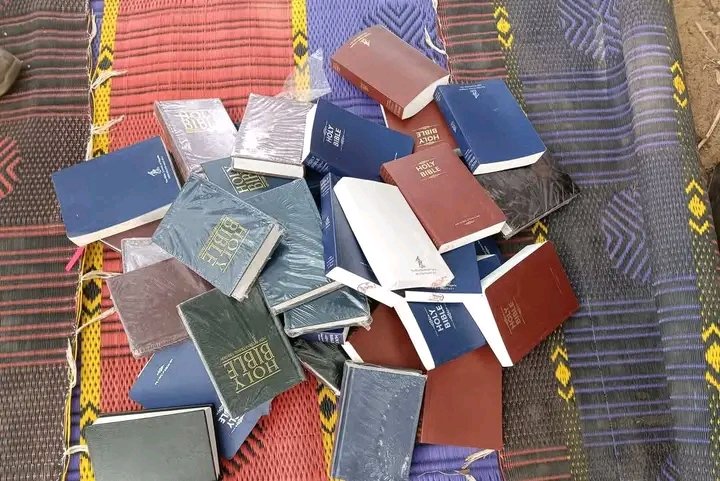
Insecurity, inadequate funding and a shortage of trained language specialists are hampering Bible translation efforts in Nigeria, as a global assessment estimates that the country needs more than 10 million additional copies of the Bible.
The findings were part of the 2026 Bible Access List published by the Bible Access Initiative, which estimates that more than 500 million Christians worldwide face restrictions that make accessing Scripture difficult, dangerous or impossible.
The assessment, which covers 106 countries, also estimates that more than 125 million Christians across 81 countries want a Bible but do not currently have one.
Nigeria ranks third among countries with the largest estimated Bible shortages, behind the Democratic Republic of Congo and Ethiopia, with India ranking fourth. All four countries have estimated shortages exceeding 10 million copies.
The findings highlight the challenges facing organisations working to translate, produce and distribute the Bible in Nigeria, where insecurity, funding constraints, limited infrastructure and linguistic diversity complicate efforts to make Scripture accessible.
According to the Bible Access Initiative, Bible shortages refer to Christians who want a personal copy of Scripture but do not have one. This differs from Bible access restrictions, which describe circumstances that make obtaining or using scripture difficult or dangerous because of government controls, extremist violence or social pressure.
The assessment also identifies poverty, illiteracy, inadequate infrastructure and limited internet connectivity as barriers to accessing Scripture.
Globally, more than 550 million Christians across 33 countries reportedly face severe socioeconomic barriers to Bible access, with an estimated 82 million Christians in those countries lacking a Bible.
The report further estimates that more than 400 million Christians across 42 countries live without internet access, while about 277 million across 48 countries live in environments where accessing Scripture online is unsafe or restricted.
These findings underscore why the availability of a digital Bible does not necessarily translate into practical access, particularly in communities where electricity, internet connectivity and suitable devices remain limited.
Insecurity disrupts Bible translation
Beyond the shortage of physical copies, insecurity is threatening efforts to translate Scripture into Nigeria’s indigenous languages. The Nigeria Bible Translation Trust (NBTT) raised the concern during activities marking its 50th anniversary in Jos, Plateau State, on October 12.
Its executive director, Patience Toma, said insecurity had disrupted translation projects in rural communities, forced residents to flee their homes and affected the safety of language workers. Toma disclosed that some translators working in rural communities had been killed, although the organisation did not have official statistics on the number of casualties.
“We have translators working in rural communities, and insecurity has affected the work in those areas. Some translators have been killed., she said, calling on the federal government to strengthen security in vulnerable rural communities to protect translators and language development workers and enable them to continue their assignments.
The challenges extend beyond the translation of religious texts. The NBTT also documents indigenous languages, develops writing systems and produces literacy materials to help communities read and write in their mother tongues.
Funding is another major obstacle confronting Bible translation organisations in Nigeria. Toma said approximately 95% of the resources available for Bible translation in the country came from outside Nigeria largely from Western nations, according to report by Premium Times.
She called on Nigerian churches, individuals and local institutions to contribute more towards the work, saying that stronger local participation was necessary to sustain translation projects.
“We need Nigerians, churches and local institutions to show greater interest in supporting Bible translation. It is important that we take responsibility for the languages and communities that we serve,” she said.
Nigeria’s linguistic diversity adds another dimension to efforts to make Scripture accessible. The NBTT, meanwhile, says more than 600 minority languages require attention through Bible translation and broader language development.
Toma has also urged mission agencies and language development organisations to embrace digital technology to improve communication and reach younger generations.
“Social media and digital technology, including artificial intelligence, have come to stay. We must learn to use them positively to reach the younger generation through languages and formats they understand,” she said.
However, The Religion Journalism Foundation’s efforts to obtain the perspective of the Bible Society of Nigeria on the findings and their implications for Bible access in the country were unsuccessful before this report was filed.
This reporter sent direct messages to the Society’s national general secretary and also emailed the organisation through its official email address to request an interview. In response to the email, the reporter was informed that the chief executive who could provide further details for the interview was outside the country.
Consequently, the Society’s perspective on the findings and their implications for Bible translation and distribution in Nigeria could not be obtained as of the time of reporting.