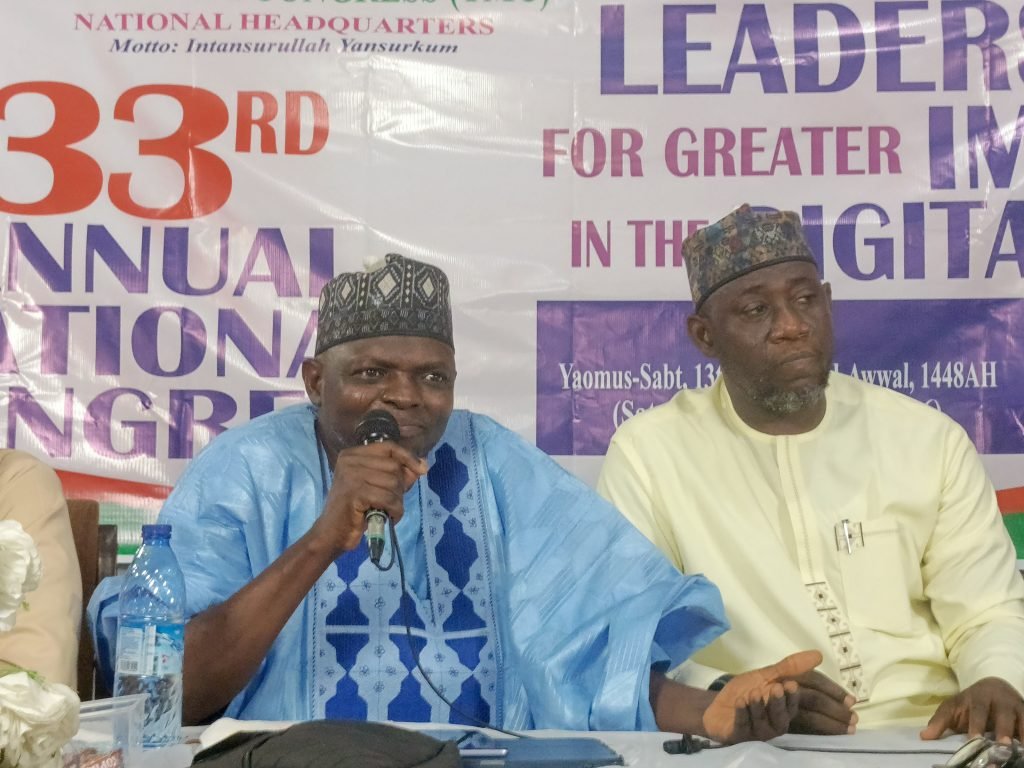
A Nigerian university professor, Ajiboye Shuaib Osunleke, has warned that ineffective leadership could undermine Islamic organisations’ efforts to embrace digital technology, urging Muslim leaders to strengthen online da’wah, adopt ethical artificial intelligence (AI) practices and invest in youth leadership development.
Osunleke, a lecturer in the Department of Chemical Engineering at Obafemi Awolowo University, Ile-Ife, gave the warning on Saturday, October 24, at the 33rd National Congress of The Muslim Congress (TMC) in Lagos. He spoke on the theme, “Strengthening Leadership for Greater Impact in the Digital Age.”
The professor argued that access to technology alone would not guarantee organisational progress without leaders capable of managing change and deploying available resources effectively.
He cited a statistic in his presentation indicating that 70 per cent of digital transformations fail to meet their objectives, attributing the problem largely to leadership rather than technological shortcomings.
Islamic organisations urged to strengthen digital da’wah
Osunleke urged Islamic organisations to complement their conventional da’wah activities with digital platforms to reach wider audiences, particularly young people who increasingly use the internet to access information and religious guidance.
He recommended greater use of social media, virtual learning platforms and online leadership training to expand the reach of Islamic teachings and strengthen engagement with Muslim communities.
The lecturer also identified challenges facing Islamic organisations in the digital age, including limited resources, coordination across decentralised structures and the need to remain relevant amid rapid technological developments.
He outlined five competencies essential for effective leadership in the digital age: digital fluency, adaptability, emotional intelligence and empathy, data-informed decision-making, and inclusive collaboration.
According to him, leaders do not necessarily need to become computer programmers but should understand technology sufficiently to identify useful tools, evaluate emerging opportunities and determine where automation and AI could improve organisational efficiency.
Ethics must guide AI adoption
Osunleke cautioned that the growing adoption of AI must be accompanied by ethical safeguards, particularly concerning data use, algorithmic bias and accountability.
“Greater capability demands greater responsibility,” he said, stressing the need for Islamic organisations to ensure that technological innovation remains consistent with their ethical and religious values.
He maintained that leadership in the digital age should remain grounded in justice, wisdom, compassion and accountability.
The professor also urged TMC to introduce measurable performance indicators to evaluate its activities, including member engagement, retention, innovation and the speed with which ideas are translated into practical outcomes.
He said assessing performance through measurable results would help organisations determine whether their programmes were producing meaningful impact rather than relying solely on the number of activities conducted.
Muslim leaders urged to invest in youth leadership
Osunleke identified mentorship, continuous learning and succession planning as essential to sustaining organisational growth, urging Islamic organisations to prepare younger members for leadership responsibilities.
He proposed leadership development programmes, mentorship initiatives and partnerships with educational institutions to strengthen the capacity of emerging leaders.
The professor also advocated youth empowerment initiatives that would give young people opportunities to contribute to organisational decisions and develop the skills needed to lead in an increasingly digital environment.
According to him, effective succession planning would help organisations sustain their achievements beyond the tenure of individual leaders.
He further urged Islamic organisations to establish leadership academies and strengthen collaboration to improve their capacity to respond to emerging challenges.