
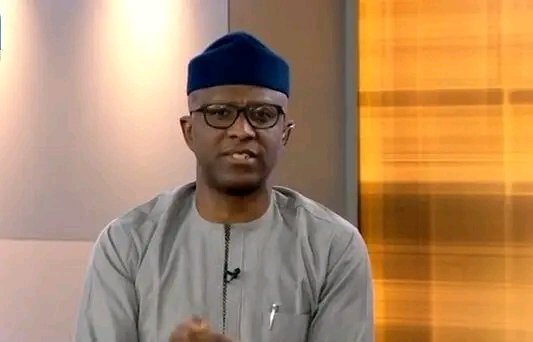
Former presidential aide, Laolu Akande, has challenged allegations that former Vice President Yemi Osinbajo favoured Christians from his church in government appointments, insisting that the composition of the former vice-president’s office reflected religious and regional diversity.
Akande, who served as senior special assistant on media and publicity in the office of the vice president between 2015 and 2023, described the allegations by former secretary to the government of the federation (SGF), Babachir Lawal, as fabricated, challenging him to produce evidence of the alleged list of appointees.
The dispute has renewed attention to questions of religious representation, fairness in public appointments and the relationship between religious leaders and political authority in Nigeria.
Lawal, now a chieftain of the Nigeria Democratic Congress (NDC), had alleged that most of the appointments made by Osinbajo while serving as vice president involved Christians from the same church, the Redeemed Christian Church of God (RCCG), to which Osinbajo belongs.
In an interview with Symfoni TV, Lawal claimed that a list containing 28 proposed appointees had 26 names belonging to people he identified as Yoruba and members of the RCCG.
However, Akande rejected the account, insisting that no such consolidated list existed and disputing the claim that Osinbajo’s appointments were driven by religious or ethnic considerations.
In a response published on October 17, Akande said his experience working in the office of the vice president gave him firsthand knowledge of the appointment process.
“There was no such list of 28 names or more. It’s a lie,” he said, challenging Lawal to produce the alleged memorandum.
Akande explained that Osinbajo submitted appointment memoranda directly to former President Muhammadu Buhari for approval, after which the approved documents were passed through the appropriate administrative channels.
He also rejected the claim that the appointment process had been delayed for three months because of concerns about the religious and ethnic backgrounds of the nominees.
To counter the allegation of religious favouritism, Akande cited the presence of Muslim officials in senior positions vice president’s office. He identified Ade Ipaye, the office’s chief of staff, as a Muslim and pointed to Maryam Uwais, who served as special adviser on social investment, and Ahmad Zakari, a former special adviser on infrastructure, as examples of Muslims who held senior advisory positions.
Akande argued that the composition of the office demonstrated that it was not organised around a single religious community. “The Office was one of the most inclusive, pan-Nigerian offices in that government, North, South, East, West, Christian and Muslim,” he said.
He also disputed Lawal’s claim that former Minister of Industry, Trade and Investment, Okey Enelamah, received his appointment because of his relationship with Osinbajo and the RCCG. According to Akande, Enelamah was recommended by individuals in the financial services sector, while Buhari’s former Chief of Staff, Abba Kyari, informed Osinbajo of the president’s decision to appoint him.
Akande’s rebuttal places the existence of the alleged 28-name memorandum at the centre of the dispute. While Lawal’s account raises questions about the religious composition of Osinbajo’s proposed appointees, Akande maintains that the document and the circumstances surrounding it have been misrepresented.