For years, the Nigerian government has played a central role in the organisation of Hajj, with the National Hajj Commission of Nigeria (NAHCON) overseeing the pilgrimage and state pilgrims’ welfare boards handling arrangements for pilgrims from their respective states. The system also includes licensed private tour operators, who cater for private pilgrims under NAHCON’s regulatory oversight.
But the way Nigeria manages Hajj is changing, with growing calls for government to move away from direct operational responsibilities and allow state boards and private operators to take a larger role.
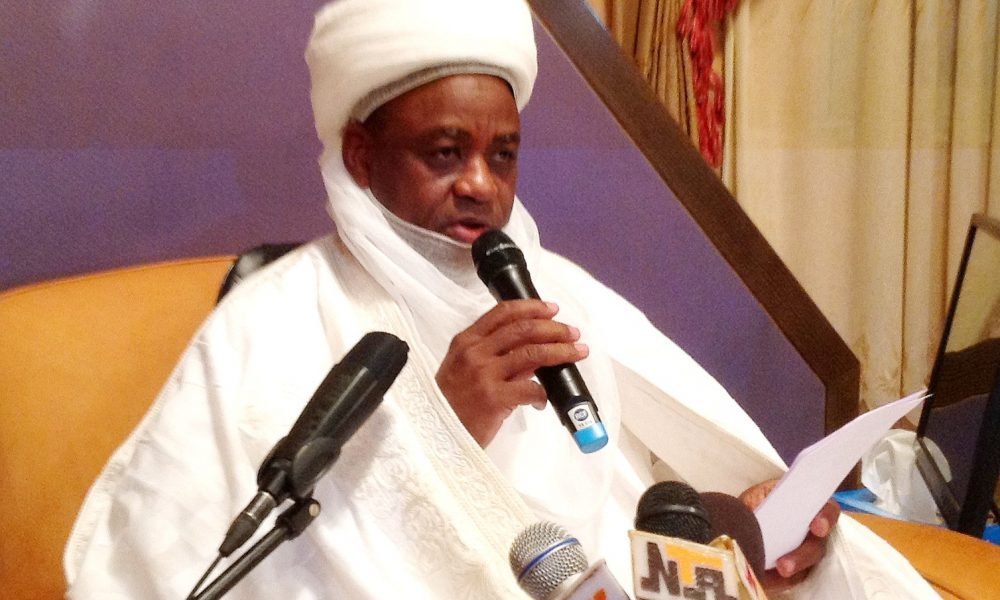
The latest call came from Ishaq Oloyede, Secretary-General of the Nigeria Supreme Council for Islamic Affairs (NSCIA), at the council’s General Assembly in Abuja on October 1. Oloyede questioned the continued involvement of government in organising Hajj and said its role should focus on facilitating the pilgrimage.
He also cautioned against sponsoring Muslims who cannot afford Hajj, noting that the pilgrimage is not compulsory for those who lack the financial means to undertake it.
Oloyede’s position raises a broader question about Nigeria’s Hajj system: what exactly should government be responsible for, and why does he want that role reduced?
How Hajj is currently organised
The National Hajj Commission of Nigeria (NAHCON) is the federal body responsible for regulating and supervising Hajj activities in Nigeria.
It regulates and licenses state pilgrims’ welfare boards and tour operators. State boards are responsible for collecting Hajj fares from pilgrims and remitting them to NAHCON, while licensed tour operators handle private pilgrims. NAHCON also exercises oversight over the state pilgrims’ welfare boards.
Under the NAHCON Act, the commission licenses, regulates, supervises and oversees organisations involved in hajj and Umrah. Its responsibilities include coordinating services connected to pilgrims, including transportation, accommodation, health and other welfare-related matters.
State pilgrims’ welfare boards therefore have operational responsibilities, while NAHCON remains the federal regulator and licensed private operators are already part of the system.
What the Nigeria Supreme Council for Islamic Affairs wants changed
NSCIA wants NAHCON to concentrate on regulation and oversight while state pilgrims’ welfare boards and licensed private operators take greater responsibility for organising and delivering hajj services.
It made the position more clearly at a stakeholders’ summit in Abuja on July 15, where the 2026 Hajj was reviewed and NAHCON’s reform agenda for 2027 was discussed.
At the summit, Oloyede, its secretary-general, said Hajj administrators should help pilgrims perform the religious obligation safely, correctly, affordably and with dignity. He described hajj as more of a religious assignment than a national assignment and urged those working in the sector to see themselves as serving pilgrims.
“Everyone connected with the hajj industry should see themselves as servants of Allah serving the guests of Ar-Rahman, not just civil or public servants in any other agency,” Oloyede said. “It is a fact that for many years now, NAHCON has operated like an overworked fire department.”
The debate is coming as the organisation of hajj is changing beyond Nigeria. Saudi Arabia is reportedly moving towards greater private-sector participation in hajj operations as part of its broader reforms. In September, NAHCON said Saudi authorities had initially proposed transferring 98 per cent of national pilgrim quotas from government-run welfare boards to private business-to-business tour operators.
Nigeria negotiated a phased transition, beginning with 30% of B2B participation for the 2027 hajj. The change means private operators are expected to have a larger role in providing services to Nigerian pilgrims, while government agencies increasingly focus on regulation and oversight.
NAHCON’s own 2027 reform agenda also proposes decentralised operations with strong central oversight. Under the proposal, state pilgrims’ welfare boards and licensed operators would take charge of pilgrim services while NAHCON retains regulatory responsibilities and oversight.
The direction of the reforms therefore overlaps with the position NSCIA has been advocating. NSCIA has been calling for NAHCON to focus mainly on regulation and oversight, while state pilgrims’ welfare boards and licensed private operators take responsibility for organising and delivering hajj services. In other words, the reform being proposed by NAHCON already moves towards the separation NSCIA wants between government’s regulatory role and the actual running of hajj operations.
NSCIAs argument extends beyond the question of who should organise hajj. It also opposes government government hajj subsidies. At the July summit, it also questioned the use of government funds to subsidise the pilgrimage.
“Government has no business subsidising hajj. It is obligatory only for those who can afford it. NAHCON should regulate, while state boards and licensed operators organise the pilgrimage,” he said.
The issue of public funding for religious pilgrimages has also attracted criticism from outside the NSCIA.
A Punch Newspaper editorial in January 2026 criticised the use of public funds for religious pilgrimages, citing the allocation of N11.5 billion in the 2026 federal budget for religious pilgrimages, including N5.99 billion for NAHCON and N5.57 billion for the Nigeria Christian Pilgrim Commission. It also questioned spending by state governments on pilgrimages.
The argument centres on whether public funds should be used to support a religious obligation that Islamic law makes compulsory only for Muslims who have the financial means to undertake it