
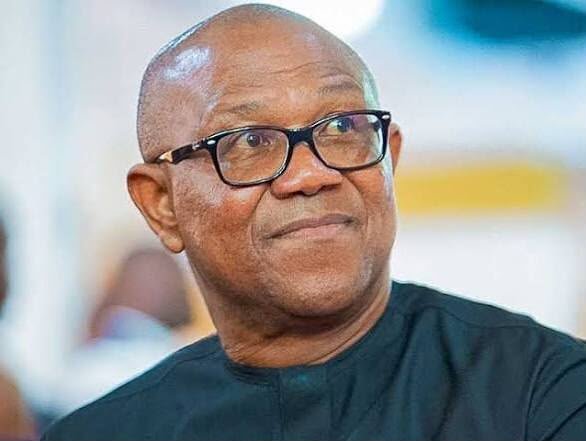
Daniel Bwala, Special Adviser to President Bola Tinubu on Policy Communication, has accused former Labour Party presidential candidate Peter Obi of introducing religious politics into Nigeria’s electoral process during the 2023 general election.
Bwala alleged that Obi capitalised on Christian opposition to the All Progressives Congress (APC)’s Muslim-Muslim presidential ticket to mobilise support, claiming that several churches that hosted him during the last election campaign have since stopped inviting him.
He made the allegations on Monday during an appearance on Channels Television’s The Morning Brief, where he discussed the opposition’s chances ahead of the 2027 general election and Tinubu’s re-election bid.
Speaking about Obi’s performance in the 2023 election, Bwala said the former Anambra State governor benefited from the religious tension surrounding the APC’s decision to field two Muslim candidates.
“Another valid point you raised about Peter Obi and the last election, I am a Christian and I know what he used as a strategy. Politics is about strategy.
“He introduced religious politics because of the Muslim-Muslim ticket at the time, and he was able to harvest, but it was the church that reacted against APC and not necessarily Peter Obi,” he said.
Bwala, who identified himself as a Christian and a pastor at Winners Chapel, claimed Obi visited 12 major churches during the previous election campaign, including his church.
He, however, alleged that the former presidential candidate had not received similar invitations ahead of the 2027 elections.
“That is why, around election cycle in the last election around this time, Peter Obi has been to 12 major churches, including my church, Winners Chapel, and I’m a pastor in Winners Chapel,” he said.
“As I speak to you today, Peter hasn’t gone to any, and I’ll challenge him in the media now. The reason is because most of these churches have disinvited him. Why? The strategy that worked for him yesterday. Many people disinvited him. He requested to be there.”
The presidential aide argued that the alleged withdrawal of invitations indicated that the religious appeal he believed helped Obi in 2023 might not produce the same political results in the next election.
“I took it from the harvest that he had in 2023, and I’m telling you, it is not happening now. And I’m giving you the basis. I am by no means coming out to say I’m accusing him, but I’m saying that what worked for him before, in response to what you say, that it is not going to work now, and this is the basis,” he said.
Bwala also questioned Obi’s current political standing, alleging that several prominent figures who previously supported him had left his political camp.
“But this is even small compared to other dynamics that have now come against him, like majority of his people, major stakeholders leaving him, and he is left with content creators, so I don’t have a basis to be afraid of him,” he added.
Beyond his comments about Obi, Bwala maintained that opposition parties were disconnected from the concerns of Nigerians and had only recently begun paying attention to voters’ needs.
“Oftentimes, we mix the people and the opposition. They are not one and the same; they are different. In fact, I will make the case that these opposition are far disconnected from the people than even the government party,” he said.
He further expressed confidence in the APC’s chances in 2027, insisting that the opposition was not sufficiently prepared to challenge Tinubu.
“We are not jittery because those who believe in analytics and numbers, and who also look at political trajectory, can tell that the opposition is not ready; they are looking at defeat right in their faces,” Bwala said.