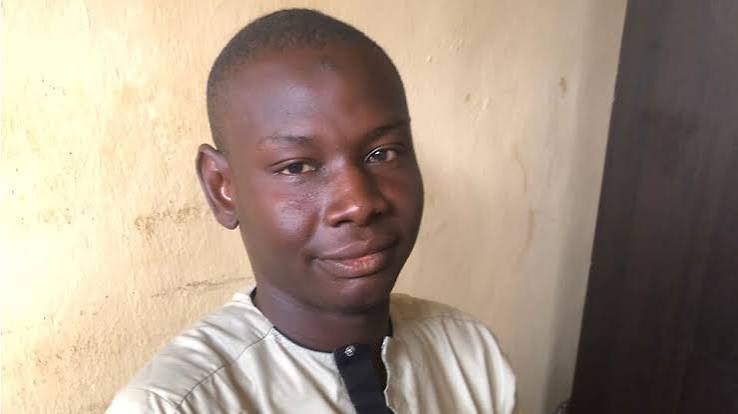
The United States government has called on Nigeria to release Sufi Muslim musician Yahaya Sharif-Aminu, who has spent more than six years in detention over blasphemy charges and faces a possible death sentence if convicted at a retrial.
US Assistant Secretary of State for Democracy, Human Rights and Labour, Riley Barnes, made the call during a hearing of the Africa Subcommittee of the US House of Representatives Foreign Affairs Committee on Tuesday.
Barnes said the US government was engaging Nigerian authorities to secure the musician’s release and end the enforcement of blasphemy laws.
“We are actively pressing the government of Nigeria and calling for the release of Sufi singer Yahaya Sharif-Aminu, who sits on death row over blasphemy charges, and we continue to urge the government to cease the enforcement of blasphemy laws,” he said.
The hearing, titled “One Year Later: Assessing Nigeria’s Efforts to Protect Christians and Secure the Middle Belt,” examined religious freedom, insecurity and the Nigerian government’s response to attacks affecting religious communities.
Barnes criticised the prosecution of individuals over alleged blasphemy, including cases involving peaceful expressions of opinion, saying such actions violated Nigeria’s obligations to protect freedom of expression and religion.
“State-level officials continue to prosecute individuals for alleged blasphemy or perceived insults to Islam, including peaceful speech, which stands in clear violation of Nigeria’s obligation to safeguard free speech and religious freedom,” he said.
He said Washington was pressing the Nigerian government to repeal blasphemy laws or, at a minimum, stop enforcing them.
Sharif-Aminu was arrested in March 2020 after sharing an audio recording containing song lyrics he had written on WhatsApp. The lyrics were considered offensive to the Prophet Muhammad.
His arrest was followed by violence, with a mob setting fire to his family’s home in Kano State.
On August 10, 2020, an Upper Sharia Court in Kano sentenced him to death by hanging after convicting him of blasphemy under Section 382(b) of the Kano State Sharia Penal Code Law.
However, the Kano State High Court overturned the conviction in January 2021 on procedural grounds and ordered a retrial. The Court of Appeal upheld the retrial order in August 2022.
In November 2022, Sharif-Aminu approached the Supreme Court, challenging the constitutionality of the blasphemy provision under which he was prosecuted. The Supreme Court allowed his appeal to proceed at a preliminary hearing in September 2025, according to the United States Commission on International Religious Freedom.
The case has attracted international attention, with the United Nations Working Group on Arbitrary Detention concluding in 2024 that his detention was arbitrary and calling for his release.
In April 2025, the Economic Community of West African States (ECOWAS) Court of Justice ruled that Nigeria’s blasphemy provisions were incompatible with its obligations to protect freedom of expression and ordered the country to repeal or amend the relevant laws.
The court’s judgment arose from a wider human rights case involving the prosecution of individuals for alleged blasphemy in Nigeria.
The European Parliament had also called for Sharif-Aminu’s release, citing concerns over his continued detention and the possibility of the death penalty.
Speaking at the November 12 hearing, Barnes said the US government was also supporting initiatives to address religious freedom concerns in Nigeria.
He disclosed that the State Department’s Bureau of Democracy, Human Rights and Labour had committed $9 million to programmes supporting early-warning and response mechanisms, legal defence for people accused of blasphemy and documentation of religious freedom violations in the Middle Belt.
Barnes said the programmes were intended to strengthen accountability and help prevent attacks against religious communities.