
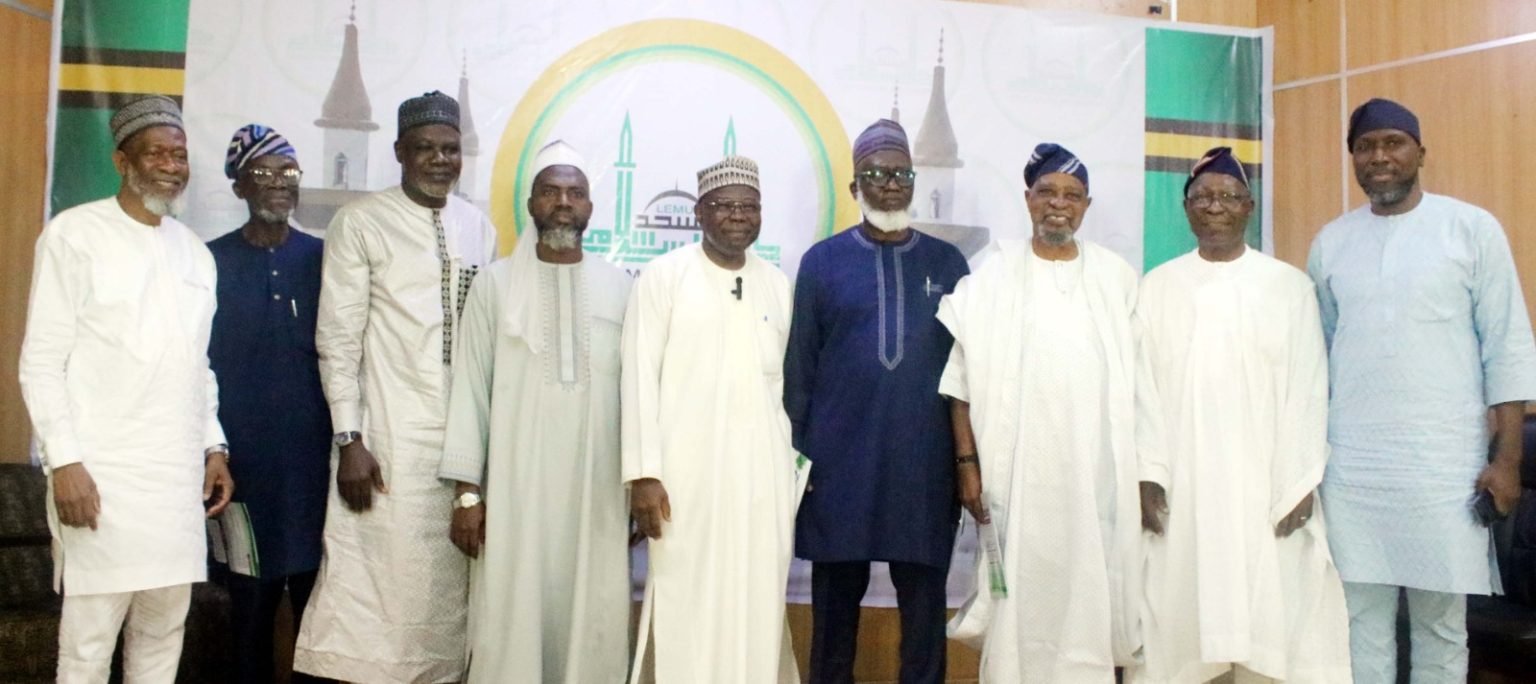
Dr Muiz Banire, a Senior Advocate of Nigeria (SAN), has urged Muslims to translate their numerical strength into political influence by participating actively in politics and engaging candidates ahead of the 2027 general elections.
Banire said Muslim organisations should develop clear political agendas and negotiate with political candidates before mobilising their members to support them during elections.
He made the call at a quarterly Da’wah workshop organised by the Lekki Muslim Ummah (LEMU) on Sunday, November 8, 2026, at the Lekki Central Mosque in Lagos.
The workshop, themed “Muslims, Politics and Good Governance,” brought together religious leaders, politicians and other stakeholders to discuss political participation, accountability and the role of Muslims in national development.
Banire, who was the guest of honour, said Muslims could not afford to remain outside politics if they wanted to influence decisions affecting their communities and the country.
He cited Prophet Muhammad as an example of a religious leader who also provided political leadership, while acknowledging the challenges of participating in Nigeria’s political environment without compromising Islamic values.
“It is not politics itself that is dirty, but the people involved in it,” he said.
The former Lagos State commissioner for special duties, transportation and the environment said numerical strength did not automatically translate into political influence.
He argued that Muslims in Lagos, despite their considerable population, had not always converted their numbers into corresponding political benefits.
Banire urged Muslim organisations to encourage more people with good character and competence to participate in politics, saying stronger representation in decision-making positions could address concerns about governance and inclusion.
“If you are able to mobilise 10 per cent good people into politics, everything will change,” he said.
Also speaking, former senator Akin Odunsi, who chaired the occasion, urged Muslims not to shy away from politics, saying the country needed people with strong moral character to manage its affairs.
Odunsi, who represented Ogun West Senatorial District in the seventh National Assembly, said his experience in politics had reinforced his belief in the importance of Muslim participation in governance.
“Muslims, true Muslims, should not run away from politics,” he said.
Similarly, the Chief Imam of Lekki Central Mosque, Imam Ridwan Jamiu, described voting as a civic responsibility and an important means of influencing leadership and promoting good governance.
Delivering a lecture titled “2027 General Elections: Voting as a Civic Responsibility,” Jamiu urged Muslims to move beyond criticising those in power and become active participants in choosing leaders.
He dismissed the notion that voting was incompatible with Islam, explaining that elections provided an avenue for citizens to choose their leaders through consultation and participation.
The cleric also warned against vote buying and supporting candidates for personal material gain, saying such practices encouraged corruption and undermined accountability.
“Anyone you cannot defend in the sight of Allah, you cannot vote for him, and you must not sell your conscience,” he said.
The executive director of the Muslim Public Affairs Centre (MPAC) Nigeria, Kamor Disu, called for fairness, equity and inclusion in governance, arguing that political participation would have little meaning without fair representation and equal protection for citizens.
Disu urged Muslims to assess political leaders based not only on campaign promises and party affiliations but also on how they distribute opportunities and protect the rights of different communities.
He also called on Muslim organisations to demand fairness for all Nigerians while ensuring that qualified members of their communities were not excluded from political opportunities.
In his welcome address, LEMU president Ibrahim Kayode Akiode described leadership as a trust and said accountability should begin with individuals in their homes, workplaces and community institutions.
He urged Muslims to uphold honesty, competence, compassion and fairness in their daily conduct.
Meanwhile, former Lagos State commissioner for home affairs AbdulHakeem AbduLateef, popularly known as Hon. Iyepe, urged Muslims to take responsibility for national development by upholding Islamic values, raising responsible children and participating actively in governance.
He also encouraged Muslims to obtain their Permanent Voter Cards (PVCs) and participate in choosing leaders ahead of the 2027 general elections.
“Use your PVC, be active as far as Islam is concerned, you are doing an act of Ibadah,” he said.