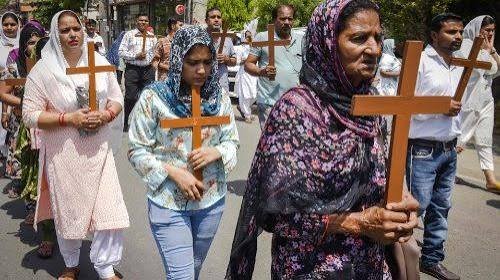
Global religious freedom deteriorated in 2026, with persecution and discrimination against Christians and other religious communities continuing to worsen, according to two newly released international reports.
The findings were presented at a press conference in Berlin on November 4, where editors of the 2026 yearbooks on religious freedom and the persecution of Christians said there had been no meaningful improvement in the protection of people targeted because of their faith.
The reports assessed the global situation as either worsening or remaining persistently poor compared with previous years. They identified Iran, Pakistan, Egypt, China and Cuba among the countries facing particular concerns over religious freedom.
The editors also warned that religious identity was increasingly being used for political purposes, with some governments and political movements exploiting religious narratives to restrict freedom of belief.
Thomas Paul Schirrmacher, president of the International Institute for Religious Freedom (IIRF) and the International Society for Human Rights (ISHR), said religious freedom faced threats from both those who persecute religious communities and those unwilling to defend the right internationally.
“The horrifying reports of religious persecution show no sign of abating,” Schirrmacher said.
He noted that killings of Christians, moderate Muslims and followers of traditional religions by Islamist extremist groups were spreading across different parts of Africa.
Schirrmacher also expressed concern that religious freedom was increasingly being sidelined in international politics amid conflicts in Ukraine, Ethiopia, Iran and the Middle East.
He said geopolitical interests, wars and economic dependencies were weakening the willingness of governments to challenge religious persecution.
According to him, this trend could encourage governments that violate the rights of religious minorities because they may face fewer consequences internationally.
Schirrmacher called for a broad alliance involving politicians, journalists, academics, religious leaders and human rights organisations to defend religious freedom.
He said such efforts must be based on independently collected and carefully verified information.
The reports also highlighted the use of religion to justify violence in Ukraine, where Russia’s war has damaged religious institutions and affected religious communities.
Johann Matthies, political representative of the Evangelical Alliance in Germany, said more than 640 places of worship had been damaged or destroyed during the war, according to Ukraine’s Ministry of Foreign Affairs.
He also cited Ukrainian estimates that at least 67 clergy members from different denominations had been killed by Russian forces by the spring of 2025.
Matthies said religious communities in occupied territories had faced raids, interrogations, imprisonment and the loss of their places of worship.
He criticised the use of Christian beliefs to justify Russia’s military actions, arguing that religion should not be manipulated for political purposes.
The reports further drew attention to the experiences of women from religious minorities, who often face discrimination and violence because of both their gender and religious identity.
Gudrun Kugler, a member of Austria’s National Council and vice-president of the OSCE Parliamentary Assembly, said women from religious minorities were particularly vulnerable to forced marriage, abduction, sexual violence and social exclusion.
She said these forms of persecution often received less attention despite their serious effects on individuals and communities.
The yearbooks also highlighted religious freedom concerns in Egypt and Cuba, where Christian communities and religious figures have faced discrimination, imprisonment and restrictions.
Martin Lessenthin, a human rights expert and co-editor of the yearbooks, said political and economic relationships with governments accused of violating religious freedom often prevented international actors from responding adequately.
The 2026 yearbooks examine the state of religious freedom worldwide and document persecution and discrimination against Christians.
They are published by the International Institute for Religious Freedom and the International Society for Human Rights.