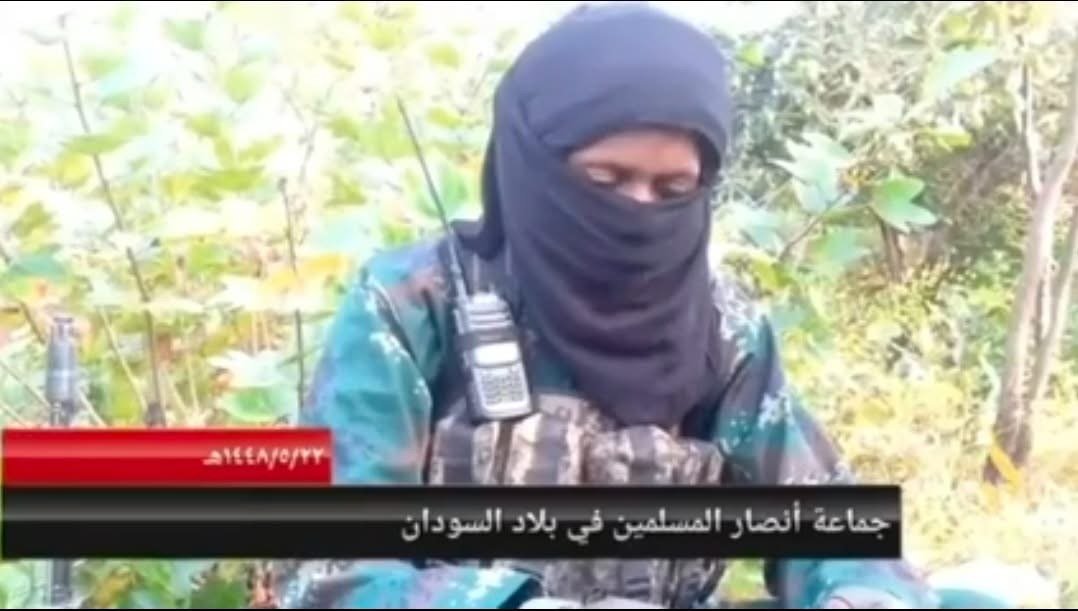
The Jama’at Ansar al-Muslimin fi Bilad Sudan, also known as Ansaru, has renewed its claim of responsibility for the killing of Sheikh Yahaya Ibrahim Masussuka, a prominent Islamic cleric shot dead in his hometown of Dutsin-Ma, Katsina State, last month, accusing him of rejecting Islamic teachings and defending the attack with its interpretation of religious history.
In a video released on 2 November, the extremist group said the killing was intended to bring its members closer to God, while dismissing calls for security agencies and the Nigerian legal system to handle allegations of blasphemy against the Prophet Muhammad.
Masussuka was known for advocating peaceful coexistence and interfaith understanding, including through his public calls for harmony between Muslims and Christians. His killing drew attention to the dangers faced by religious figures whose advocacy challenges the ideology of extremist groups operating in northern Nigeria.
The latest video, obtained by Religion Journalism Foundation, runs for more than nine minutes and features footage of Ansaru’s training activities. A masked man seated in a bushy area explains the group’s reasons for killing the cleric, presenting the attack as an act of religious devotion.
“Like we said in the past, we are the ones that God has used in order to end the life of Masussuka. This is something that we did in order to look for closeness with the Almighty God,” the speaker said.
He added that the group hoped its actions would earn it a reward in the hereafter, invoking a Quranic description of a day when wealth and children would offer no benefit.
The speaker then sought to place the killing within what he described as a historical tradition of eliminating people considered enemies of Islam.
“And bringing the end of people who are arna (Infidel) and who are blaspheming Islam is not something that has started today. It is enshrined in the history of Islam,” he said.
He cited several instances in Islamic history in which individuals he described as infidels were killed, presenting them as precedents for Ansaru’s actions against Masussuka.
The group also referenced a verse attributed to the Islamic scholar Ibn al-Qayyim to portray such killings as occasions for religious celebration.
Ansaru’s appeal to religious history formed part of its broader attempt to justify the killing, which it portrayed as a response to what it considered violations of Islamic teachings.
The speaker also rejected criticism that the group had taken the law into its own hands, arguing that Nigeria’s security agencies and legal system could not be relied upon to address alleged blasphemy.
“The security, the national security itself is an infidel,” he said.
He further argued that laws which, in his view, protect people accused of blaspheming the Prophet Muhammad could not be used to sanction individuals such as Masussuka.
“The law that allows blasphemy to the Prophet and protects people who have blasphemed the Prophet is not something we can rely on for sanctioning people like Masussuka,” he said.
The speaker also referred to instances of mob violence against people accused of blasphemy in northern Nigeria, using them to defend the group’s position.
However, Ansaru’s argument does not change the fact that the killing was an extrajudicial act carried out without any lawful process.
The group’s condemnation of Masussuka extended beyond its allegations of religious misconduct to his advocacy for peaceful relations between Muslims and non-Muslims.
In the video, the speaker also described Masussuka as a member of the “Ƙala-ƙato” or Qur’aniyyu movement. He claimed that the group did not support relations with non-Muslims, and criticised Masussuka for promoting peaceful coexistence between people of different faiths.