
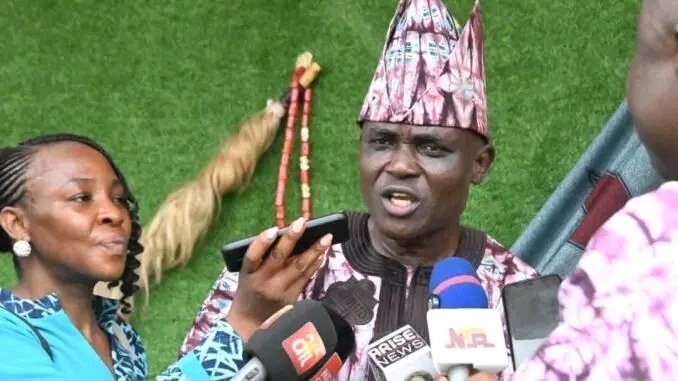
The Zonal Pastor of the Redeemed Christian Church of God (RCCG), Everlasting Light Parish, Abuja, Pastor David Okoror, has urged Nigerian leaders to use power as a shield to protect citizens rather than as a sword to dispossess them.
Okoror made the call on Sunday in Abuja during the church’s Yoruba Cultural Sunday celebration, themed, “Our culture is not evil and should not die.” Addressing political leaders and public officeholders, Okoror said the authority entrusted to them should be used to protect citizens, safeguard their rights and improve their welfare.
“My message to the government and those who hold power is that they should use power and authority as a shield, as a protection, as a covering for the people,” he said.
He explained that such protection should include shielding citizens from insecurity, unemployment, hunger and destitution. According to him, leaders who misuse their positions risk depriving citizens of their rights and worsening the hardship they face.
“When you use power as a sword, you use it to dispossess the people, you steal from the people, you take away their rights,” he said.
The cleric, who is also a security expert, said Nigeria was grappling with insecurity, unemployment, hunger and other socioeconomic challenges but urged citizens to remain grateful to God despite the difficulties.
Despite the challenges confronting the country, the pastor expressed optimism about Nigeria’s future, saying there was hope as long as citizens continued to trust in God. He cited the biblical instruction in 1 Thessalonians 5:18, which calls on Christians to give thanks in all circumstances, adding that Nigeria’s continued existence as one country despite its challenges was a reason for gratitude.
Okoror said the church organised the cultural celebration to recognise the contributions of the Yoruba people to national development and promote unity among Nigeria’s diverse ethnic groups.
He commended the Yoruba race for its achievements in education, medicine, industry and other professional fields, noting that its contributions extended beyond Nigeria.
The cleric said celebrating Yoruba heritage in a congregation comprising people from different ethnic backgrounds demonstrated how cultural diversity could strengthen national cohesion. “Today we are celebrating Yoruba culture but the Igbo man is here, the Edo man is here.“I am not a Yoruba person but I am wearing agbada and a Yoruba cap. We are going to eat amala, gbegiri and Yoruba food. That is how we promote unity,” he said.
He added that appreciating another ethnic group’s traditions could foster mutual respect and understanding among Nigerians.
Also speaking, the Parish Pastor, Otunba Oreoluwa Ariba, said the celebration was his way of expressing gratitude to God through the preservation and appreciation of Yoruba heritage.
Ariba, who hails from Ogun State, likened the event to the Oju de Oba festival celebrated in the state, describing praise and thanksgiving as important expressions of faith. “When you praise God, you move Him from His throne. It is the easiest way to get victory, to get answers to prayers and for God to fight your battles,” he said.
He explained that the church deliberately incorporated Yoruba language, traditional attire and indigenous music into the service to demonstrate that Christianity did not require people to abandon their cultural identities.
Similarly, the chairman of the organising committee, Dr Bolaji Mejabi, a lecturer at Baze University, Abuja, called for a reassessment of negative perceptions about African culture.
Mejabi said the portrayal of African traditions as evil had contributed to the abandonment of valuable cultural practices and values. “Our culture is not evil at all. There are some practices we have to modernise, but everything should still give glory to God,” he said.
He expressed concern that some Yoruba children could no longer speak their indigenous language, greet elders appropriately or identify with names that reflect their cultural heritage.
The lecturer said the Omoluabi ethos, which emphasises integrity, respect, love and unity, offered important values that could help strengthen Nigeria’s moral foundation. “Yoruba culture is all about love, unity and respect. We respect our elders and show love. If we revive these values in our homes and schools, it will reflect in governance,” he said.
Mejabi urged parents to teach their children the Yoruba language, traditional greetings, appropriate dressing and other positive cultural practices, stressing that cultural preservation should begin at home.
He added that families, schools and religious institutions had important roles to play in passing cultural values to younger generations. The organisers said the church had previously celebrated other ethnic groups and intended to continue using cultural events to promote national cohesion, thanksgiving and appreciation of Nigeria’s diverse heritage.