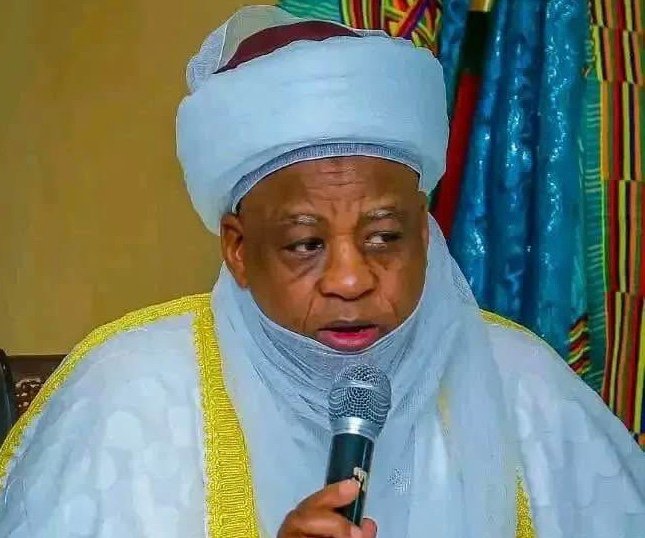
The Sultanate Council is planning to establish an Islamic microfinance bank to provide financing for small businesses and help tackle poverty in Nigeria and other West African countries.
The Sultan of Sokoto, Alhaji Sa’ad Abubakar, said the proposed Caliphate Islamic Microfinance Bank had reached an advanced stage, with potential investors, including those from outside Nigeria, expressing interest in the project.
He disclosed this on Sunday in Sokoto during a training programme on Baitul Mal wat Tamweel (BMT), an Islamic model that combines social welfare with financial services to support economic development.
The three-day programme was organised by the Islamic Development Bank in partnership with the Sokoto State Zakat and Endowment Agency.
According to the Sultan, the proposed bank is expected to help entrepreneurs access financing that complies with Islamic principles, enabling them to grow their businesses, create jobs and improve their livelihoods.
He was represented at the event by the District Head of Kilgore, Alhaji Jabbi Kilgore.
The initiative also reflects efforts to make Zakat and other charitable resources more effective in addressing poverty, particularly by helping beneficiaries develop sustainable sources of income rather than depending solely on periodic assistance.
The Chairman of the Sokoto State Zakat and Endowment Agency, Lawal Maidoki, said economic empowerment should be an important part of programmes designed to support disadvantaged people.
He explained that the BMT model could help connect charitable giving with opportunities for beneficiaries to establish businesses and become financially independent.
Under the model, funds from sources such as Zakat, Sadaqah and Waqf can support eligible people, while Islamic microfinance services provide opportunities for business development through arrangements that comply with Shariah principles.
Maidoki said this approach could help address some of the difficulties faced by people who struggle to access conventional financial services.
An Indonesian social activist and Islamic economics and finance expert, Saat Suharto, said the training was intended to strengthen participants’ understanding of how the model could be applied to support vulnerable communities.
He said effective implementation could help beneficiaries improve their livelihoods and eventually reach a position where they could contribute Zakat themselves.
Suharto also stressed the need for better management of Zakat and Waqf institutions, improved staff capacity and the use of technology to strengthen transparency and accountability.
The Sultan urged participants to use the training to develop practical approaches that would improve the welfare of vulnerable people.